
“Tradition!” you sing this simple word to any Jewish person, and they will automatically begin humming the melody of Sheldon Harnick’s Fiddler on the Roof. After all, it is traditions that become the roadmap of our people.
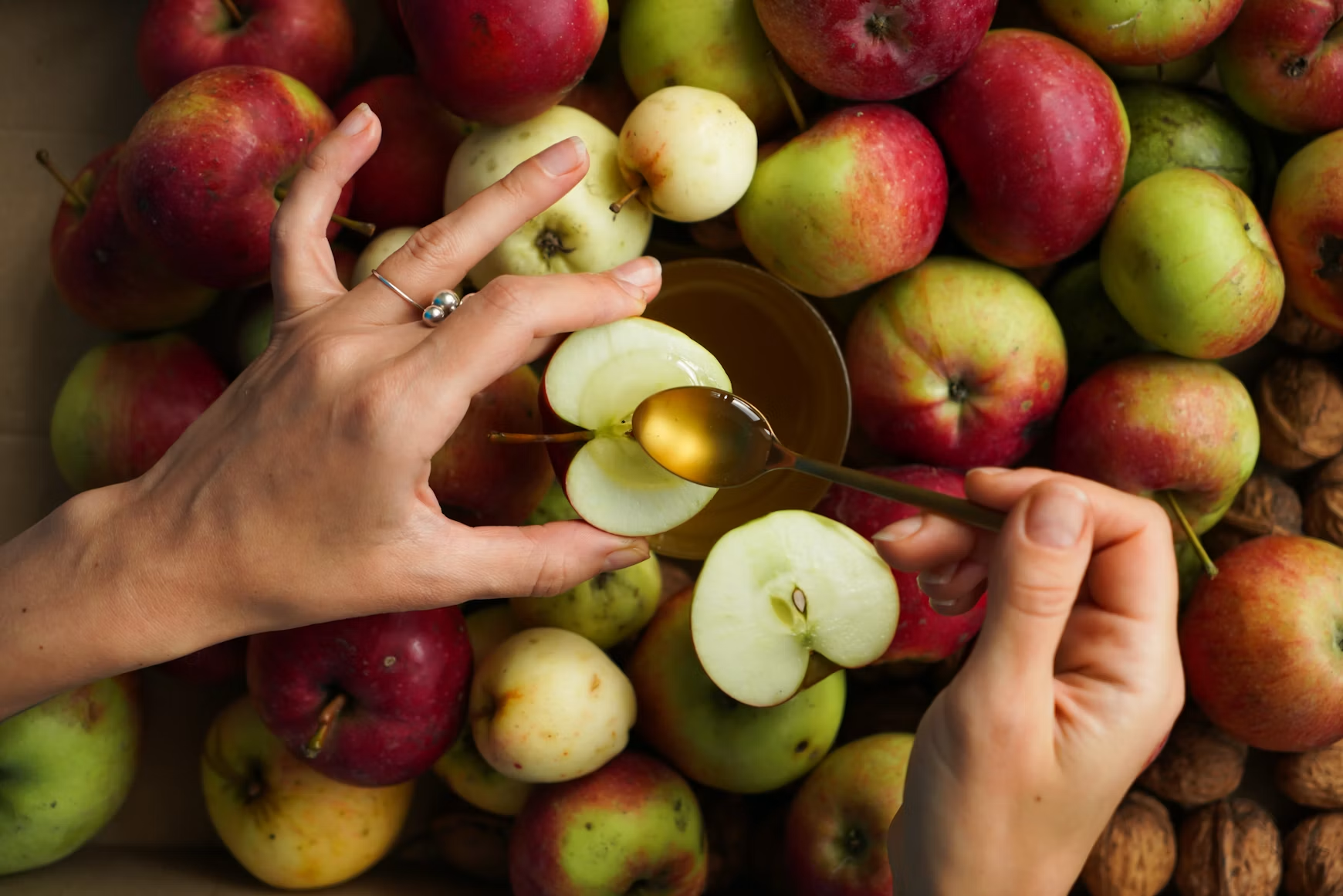
On Friday nights we light candles, say kiddush and eat challah, during Chanukah we light a menorah, on Passover we have a seder and eat matzah. I always found it interesting that when it comes to Rosh Hashanah, people connect the holiday to dipping apples in honey and blowing the shofar. Yes, it is a significant part of the holiday, the shofar a call to action of a spiritual awakening. We dip apples in honey to represent a sweet new year, but does it truly encompass a meaningful understanding to young children?
What does a new year mean to young children? After all, the concept of time itself is an abstract construct children do not truly understand until around 11 years old.
In America, we celebrate the New Year by setting off fireworks. The Lunar New Year is celebrated with vibrant lion and dragon dances. In Colombia, people walk around the block with empty suitcases to manifest a year of travel.
While we all have different traditions, how do we create a meaningful and relevant experience for our children? Young children are concrete thinkers. They live in a world of physicality.
In Montessori philosophy, when it is a child’s birthday, the child walks around a candle while holding a globe to connect their growth to the earth's orbit and honors their life journey.
Waldorf programs create birthday rings. A segmented wooden circle with small holes. It is a ritual centerpiece to mark a child's growth. Each hole holds a candle for every year of the child’s life. Small ornaments are displayed around it to reflect their milestones and interests.
In the Reggio Emilia philosophy, classrooms typically build unique, flexible customs alongside the children to make each milestone feel valued within the community.
As Rosh Hashanah approaches, I implore parents to go beyond dipping apples in honey. Create meaningful ways to bring the new year into your home. Sit with your child and look at baby pictures together. Discus their growth and share stories together. Create a growth chart with your child. Have them stand by their door frame and mark how tall they are. Throughout the year, your child will be sure to go back and see how much they have grown. Revisit and make a new mark each year. For older children, write a letter together about the past year. Share favorite moments and pictures. Each Rosh Hashanah, open the letter together to reflect on the past year and write a new one.
While traditions are passed down through generations, it is always the right time to start a new one!
Wishing you a Shana Tova!
Jessica Friedman
Senior Director of Early Childhood