
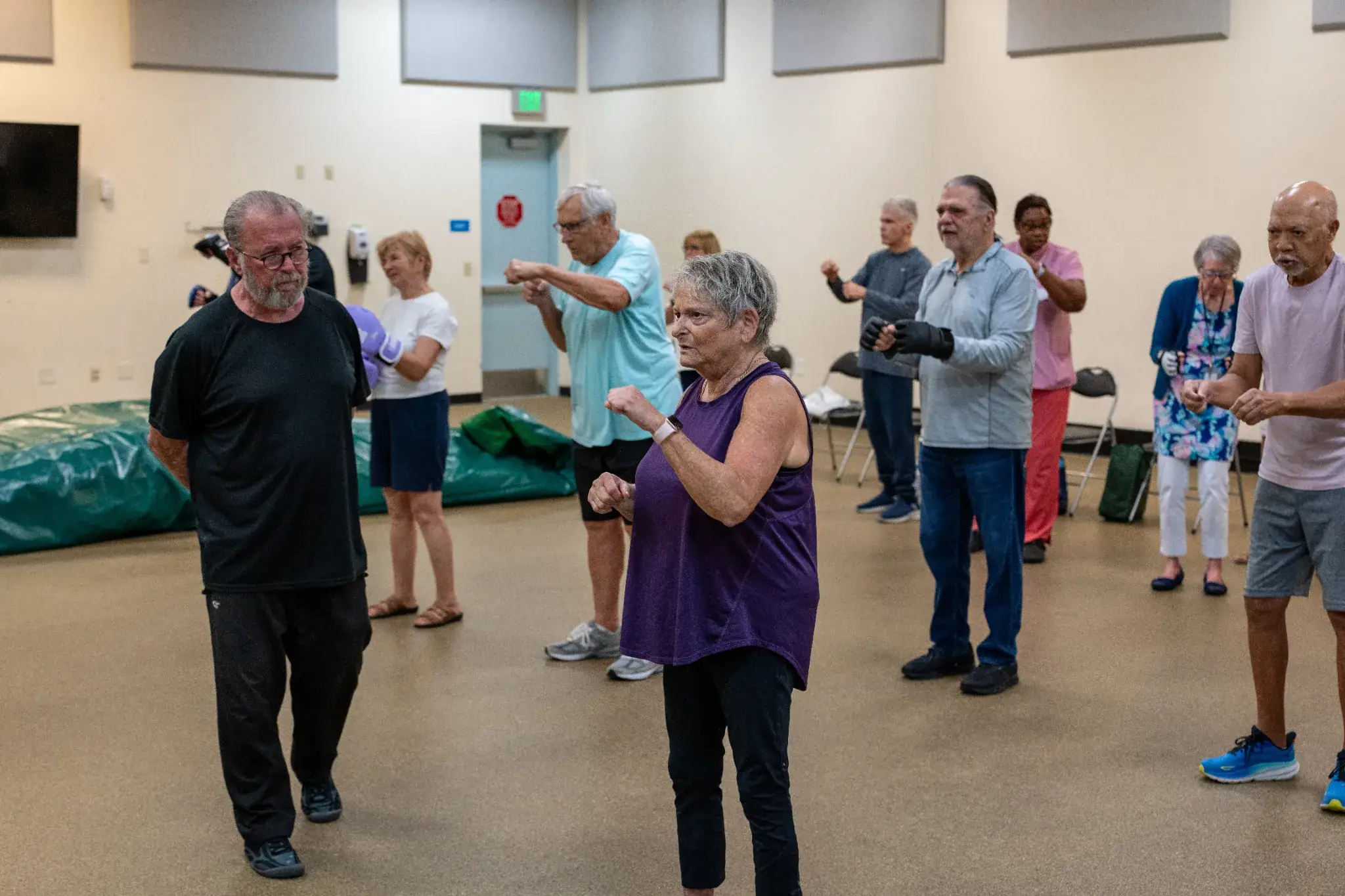
A Parkinson’s diagnosis can feel overwhelming, but it doesn’t mean giving up control. At the Mandel JCC of the Palm Beaches, Rock Steady Boxing is helping older adults flip the narrative on aging by giving older adults with Parkinson’s a dynamic, research-backed way to stay strong, balanced, and socially engaged. And no, it’s not what you think—this isn’t full-contact fighting. It’s a non-contact fitness program that uses boxing-inspired moves to help people regain strength, stability, and confidence.
Designed specifically for those living with Parkinson’s disease, Rock Steady Boxing offers more than just physical activity. It provides a sense of community, mental clarity, and emotional uplift. For older adults in the Jewish community, it’s also a meaningful way to support well-being while staying connected to a shared culture of care, perseverance, and lifelong learning.
Beyond the physical benefits, participants find encouragement, friendship and a sense of community that supports them throughout their wellness journey.
The Power of Movement for Parkinson’s and Aging

Balance and Fall Prevention
Falls are a major concern for older adults—and even more so for those with Parkinson’s. According to the CDC, 1 in 4 Americans aged 65+ falls each year, and Parkinson’s increases that risk. The reason? This neurodegenerative condition affects motor control, coordination, and reflexes.
Rock Steady Boxing targets these weak spots directly. Participants work on footwork drills, reaction timing, and core stability. Movements like side steps, pivots, and rapid direction changes simulate real-world scenarios—like avoiding a curb or regaining footing on uneven ground. Over time, this repetition helps improve neuromuscular coordination, which research shows can reduce the likelihood of falls in people with Parkinson’s.
Research published in MDPI’s Journal of Clinical Medicine shows that structured exercise programs can significantly improve gait and balance in older adults. And while boxing-based fitness hasn’t been specifically studied in that journal, related studies in Brain Sciences highlight how boxing programs enhance mobility and confidence in populations facing balance challenges, such as those with Parkinson’s disease. Together, these findings suggest that dynamic, skill-based exercise like boxing may help older adults move with greater stability and assurance.
Boosting Independence Through Strength
Boxing involves full-body effort, engaging major muscle groups in the arms, shoulders, legs, and core through punches and various exercises like cardio intervals and resistance training. This functional fitness enhances everyday movements—like walking, standing up, or carrying groceries.
As strength increases, participants often find daily tasks easier, from climbing stairs to moving around without assistance. These improvements contribute to emotional well-being, fostering a mindset shift toward resilience rather than fragility, which can be transformative.
Mental Health Benefits and Social Connection
Physical movement is deeply linked to mental health. For people with Parkinson’s, depression and anxiety are common—especially when mobility declines. Add in the loneliness many older adults experience, and isolation becomes a serious concern.
Rock Steady Boxing counters that beautifully. Classes are loud, energetic, and filled with encouragement. Coaches cheer. Classmates high-five. And no one feels left behind. The format cultivates camaraderie, where participants not only sweat together but also share stories, laugh, and support one another through both good days and challenging ones.
The structure of regular classes helps build routine and purpose, while the group setting creates space for real connection. These social interactions are as important to well-being as the exercises themselves.
The Confidence to Move Freely Again
Strength encompasses not just the physical but also the emotional and mental aspects of how secure we feel in our bodies. For many older adults with Parkinson’s, symptoms such as instability and stiffness can create fears of falling, dependency, and loss of control.
Rock Steady Boxing addresses these fears through structured workouts that enhance posture, stride, coordination, and endurance. The movement retrains the body, fostering confidence and quicker reactions.
What starts as exercise often evolves into a deeper sense of body awareness and control in daily activities, leading to noticeable improvements, such as walking steadily and standing taller.
For members of the Jewish community, engaging in purposeful movement while feeling supported adds even greater significance to the experience. Wellness is about honoring the whole person—body, mind, and spirit.
Building a New Definition of Healthy Aging
For too long, aging has been framed in terms of loss—loss of mobility, loss of independence, loss of identity. Rock Steady Boxing flips that script. It’s not about masking symptoms or pretending challenges don’t exist. It’s about meeting them with strength, determination, and a supportive team in your corner.

Designed for All Abilities and Stages
Many people think boxing fitness is only for the young and athletic, but Rock Steady Boxing is specifically designed for individuals with Parkinson’s. Classes accommodate a range of mobility levels and disease progression, with modifications available. Participants come from a variety of backgrounds and experiences, creating a supportive environment where everyone is encouraged to progress at their own pace.
For those who can't stand for long, exercises can be done seated, and coaches provide assistance for balance concerns. Each class features a warm-up, shadowboxing, footwork drills, mitt work, and strength exercises, with some including voice training to address common vocal issues.
This variety keeps participants engaged, encouraging them to move at their own pace and challenge themselves safely.
Supported by Science and Community
Research indicates that high-intensity exercise can alleviate symptoms of Parkinson’s disease. Studies have shown that non-contact boxing programs, such as Rock Steady, can enhance balance, gait speed, reaction time, and motor function.
Participants often experience increased energy, improved sleep, and a better mood. Committing to regular exercise fosters a renewed sense of purpose, particularly after a chronic diagnosis.
Importantly, the program cultivates deep social bonds that extend beyond the gym, creating a supportive community where everyone feels seen and respected.
How Rock Steady Boxing Fits into a Whole-Wellness Lifestyle
Movement is essential, but it's just one aspect of a holistic wellness approach. Programs like Rock Steady Boxing are most effective when combined with activities that support mental, emotional, social, and spiritual well-being.
Older adults often complement their boxing classes with yoga or tai chi for flexibility, aquatic workouts for joint health, and support groups for open discussions about aging and life transitions. Arts and cultural activities such as painting and music also help reduce stress and enhance cognitive function.
Healthy aging involves adapting intentionally with tools that promote dignity and connection. Rock Steady Boxing is one valuable tool, and for many, it’s a favorite.
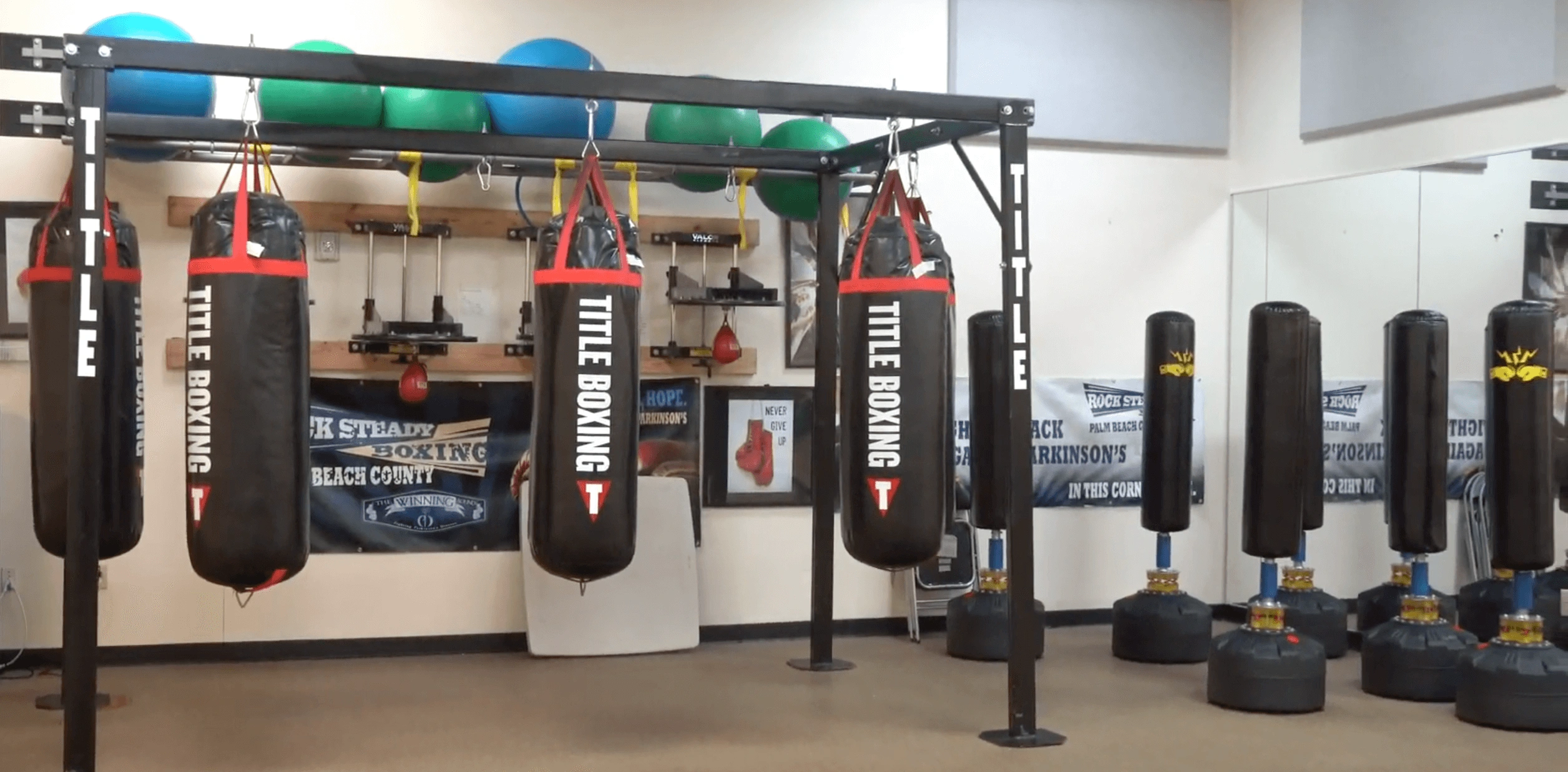
Rock Steady Boxing Isn’t Just Exercise—It’s Empowerment
There’s something magical about watching someone throw a purposeful punch after being told to slow down. It’s not about fighting in the traditional sense—it’s about embracing joy, autonomy, and moving through life on your own terms.
Older adults are often underestimated in fitness conversations, but every Rock Steady class shows that strength can take new forms with age. You can see it in the determination of each jab, the smiles between rounds, and the encouragement shared during tough drills.
Aging doesn’t mean giving up. It’s about finding new ways to show up. Whether you’re living with Parkinson’s or supporting someone who is, remember: movement and growth are still possible, and a welcoming community is waiting for you.
To learn more about how to join a Rock Steady Boxing program and explore other wellness offerings for older adults, contact the Mandel JCC of the Palm Beaches. As a center rooted in Jewish values, the JCC offers a warm, inclusive space where members of the Jewish community and the broader community can find strength, support, and a sense of belonging throughout every stage of life.